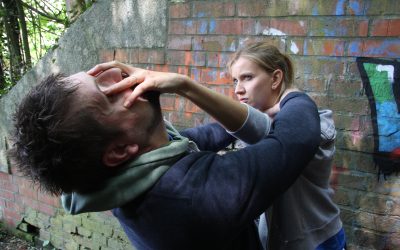
Improving your Krav Maga flow is all about becoming more adaptable and fluid in transitioning between techniques and responses during dynamic situations. The ultimate goal is to move seamlessly from one action to the next without hesitation. Keep the words of Bruce Lee in mind “Be like water, my friend. Water can flow or it can crash. Be water, my friend.”

Here are several key steps you can take to enhance your Krav Maga flow:
1. Master the Basics
- Before you can achieve fluidity, you need to have a solid foundation of basic techniques like punches, kicks, blocks, and defenses. Repeatedly practice fundamental moves until they become second nature.
- Tip: Drill individual techniques until they feel instinctive. Once you’re confident, start combining them into sequences.
2. Drill Transitions
- Krav Maga flow is largely about transitioning from one technique to another smoothly. This could be moving from a punch to a knee strike, from a block to a counter-attack, or from a defense to an escape.
- Practice drills that specifically focus on transitioning between strikes, blocks, and defensive movements. For example, practice moving from a 360 defense to a groin strike or a hammerfist to a knee strike.
3. Train Under Stress
- Fights are fast, chaotic, and stressful. To improve your flow, simulate real-world stress during training. Use drills where you have to respond quickly to unpredictable situations or multiple attackers.
- Stress drills or situational training push you to think and act in real time. The more you practice under pressure, the smoother and more instinctual your responses will become.
4. Work on Conditioning and Agility
- Physical conditioning plays a huge role in Krav Maga flow. Being able to move quickly and efficiently without getting tired will help you maintain fluidity in a fight.
- Focus on agility drills that improve your footwork, body movement, and reaction time. Incorporate exercises like ladder drills, cone drills, or plyometrics to enhance your agility and balance.
5. Practice Combos
- Create combinations of techniques that flow naturally together. For example:
- Front kick to groin > Elbow strike > Hammerfist
- Outside defense > Knee strike > Groin punch > Escape
- Work on stringing these moves together until they feel fluid, smooth, and natural.
6. Shadow Fighting
- Shadow fighting (similar to shadow boxing) allows you to practice flowing through techniques without a partner. Visualize an opponent and practice transitioning through different strikes, defenses, and movements. Focus on your timing and coordination.
- This can help you identify gaps in your transitions and improve your ability to move from one technique to another without interruption.
7. Spar Regularly
- Sparring puts everything into practice in a dynamic, unpredictable environment. Light sparring can help you improve your ability to flow through techniques under pressure and figure out which moves work best in real-time situations.
- Focus on staying relaxed during sparring so you can react quickly and naturally. The more tense or rigid you are, the harder it is to flow.
8. Develop Situational Awareness
- Flow in Krav Maga isn’t just about physical movement—it’s also about mental adaptability. Being able to assess a situation and adjust your response in real-time is crucial.
- Practice scanning and awareness drills that keep you alert and responsive to your surroundings.
9. Focus on Footwork
- Good footwork is key to maintaining fluidity in movement. Practice moving in different directions—forward, backward, and sideways—while striking or defending.
- Work on stepping in and out of range, pivoting to create angles, and staying light on your feet.
10. Mindset: Stay Relaxed and Adaptable
- One of the biggest barriers to flow is overthinking or being too tense. Stay loose, focused, and calm when training or sparring.
- The more relaxed you are, the easier it is to transition between movements smoothly. Trust your training and instincts, and avoid freezing up by embracing the chaos of a fight.
Drills to Improve Krav Maga Flow:
- Reaction Drills: Have a partner attack you with random strikes or grabs, forcing you to respond and transition between defense and counterattacks fluidly.
- Defensive Combos: Block a strike (like a hook punch), counter with a punch or kick, and immediately transition to another defensive movement or escape.
- Multiple Attackers: Practice moving between multiple attackers, focusing on how you flow from one opponent to the next without getting stuck or stopping.
Consistency and Adaptability are key. The more you train under realistic conditions, the smoother your transitions will be, and the better you’ll become at flowing from one technique to the next without hesitation.