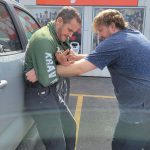
Pre-fight or pre-attack indicators are behavioral and physiological signs that may suggest a person is preparing to initiate an attack. Being aware of these indicators can help in anticipating and potentially avoiding violent encounters. Here are some common pre-fight indicators:

Behavioral Indicators:
- Clenching Fists: Tightening or clenching of fists, often accompanied by tensing of the muscles.
- Scanning: Looking around to assess the environment or potential witnesses, exits, or allies.
- Target Glancing: Repeatedly looking at a specific target, such as a part of your body they may intend to strike.
- Narrowed Gaze: Focusing intensely on the intended target, sometimes referred to as “tunnel vision.”
- Blading Stance: Turning the body slightly to the side, creating a smaller target and positioning for an attack.
- Weight Shifting: Adjusting the weight from one foot to the other, often preparing to launch an attack or escape.
- Sudden Stopping of Movement: A person who was previously animated suddenly becomes still, indicating a potential attack is imminent.
- Removing Clothing or Accessories: Taking off a hat, watch, or jacket, which could interfere with physical movements during a fight.
- Verbal Escalation: Shouting, swearing, or making threats as a precursor to physical violence.
- Finger Pointing: Aggressively pointing towards you or in your direction, indicating an escalation in aggression.
Physiological Indicators:
- Rapid Breathing: Breathing rate increases as adrenaline is released into the bloodstream.
- Pupil Dilation: The pupils may widen as part of the fight-or-flight response.
- Flushing or Pallor: The face may turn red due to increased blood flow or pale as blood is directed away from the skin to the muscles.
- Sweating: Visible sweating, especially on the face or forehead, as the body prepares for exertion.
- Trembling or Shaking: Subtle or obvious shaking due to an adrenaline surge.
- Increased Blinking: Rapid blinking as the person’s focus and tension increase.

Situational Indicators:
- Change in Environment or Positioning: The person may try to maneuver you into a position more favorable for them, such as near a wall or corner.
- Repositioning Objects: Moving items like chairs or tables to clear space for an altercation.
- Creating Distance or Closing Space: Either creating distance to draw a weapon or closing in to initiate a physical attack.
Being aware of these indicators can help you anticipate and avoid potential violence by recognizing early warning signs.
Book An Intro Class Here: https://sparkpages.io/scheduler5/?g=_KSf&l=_z0